NESO five-year view highlights upward pressure on transmission tariffs

On 9 October, the National Energy System Operator (NESO) published its Five-Year View of Transmission Network Use of System (TNUoS) tariffs for 2027/28–2031/32. The demand tariff forecast for 2027-28 has risen for most, but not all, customer types. It averages around 5% higher than NESO previously forecast in April.

The forecast trend for the next four years (average residual across metered user types) is one of substantial increases in 2028-29 (+18%) and 2029-30 (+23%), before seeing more moderate increases in 2030-31 (+2%) and 2031-32 (+3%).
NESO will publish draft 2027-28 tariffs in November, and final tariffs for 2027-28 in January 2027.
Key points
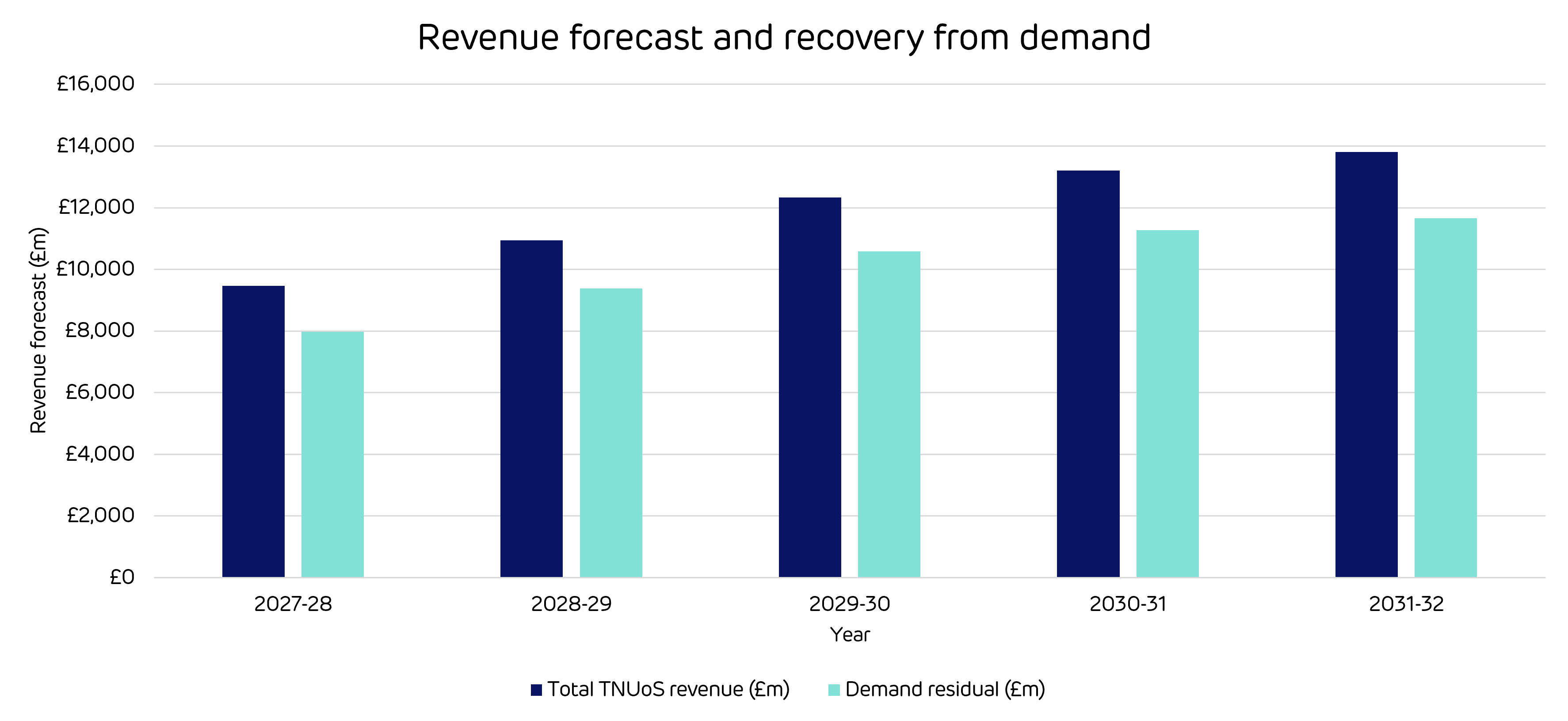
- Demand residual revenue is forecast to rise from £7.97bn in 2027-28 to £11.66bn by 2031-32, reflecting the wider increase in revenue to be recovered through TNUoS.
- This drives an upward trajectory for fixed demand tariffs over the period. NESO’s sensitivity analysis suggests every additional £100m of revenue changes the average demand residual tariff charge per site by around 1.33%, all else being equal.
- On average, 2027-28 Transmission Demand Residual tariffs are around 5% higher than April Initial Tariffs, driven by the increase in revenue to be collected.
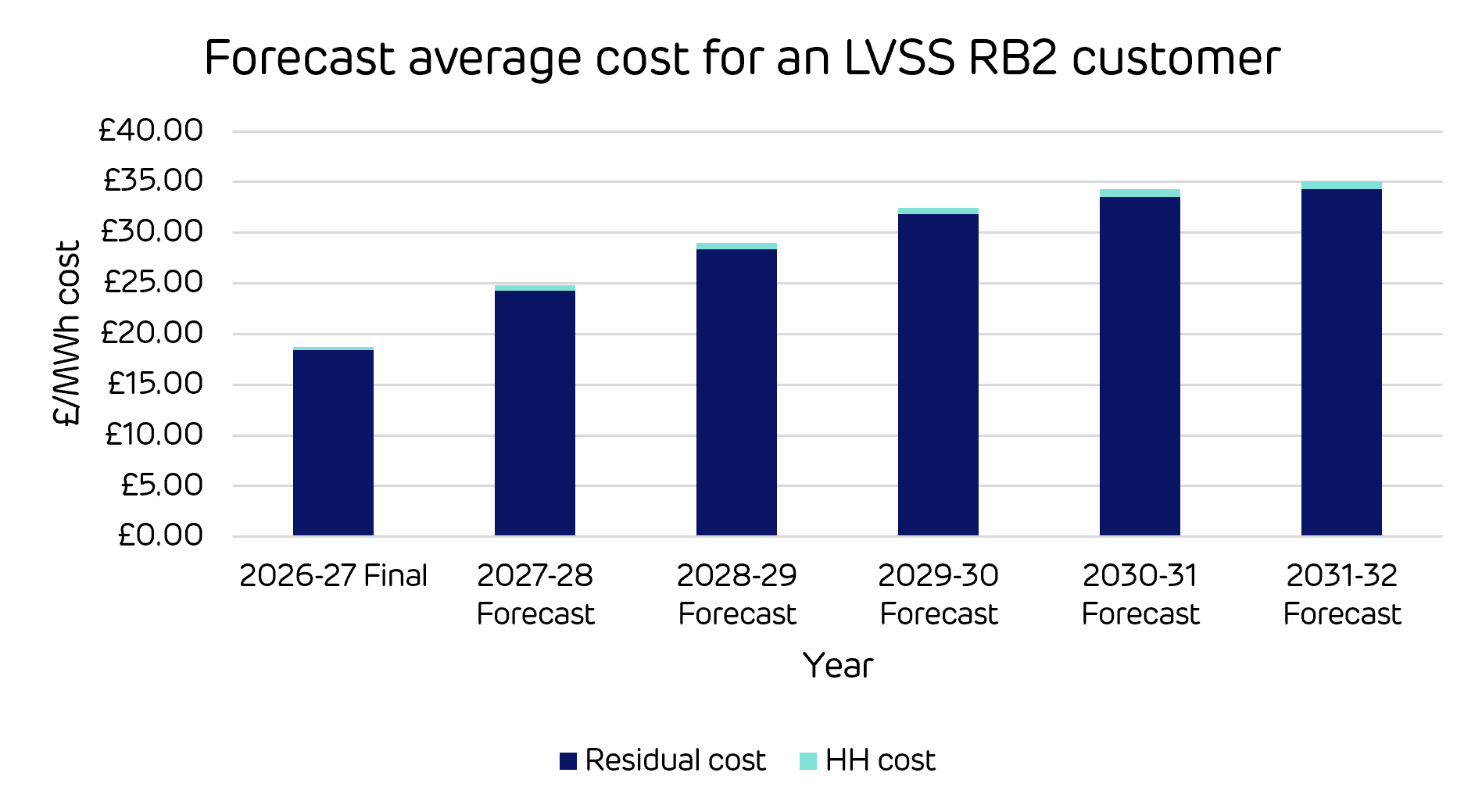
- For a “typical” residual band 2 low voltage site specific customer, TNUoS is forecast to increase £6.10/MWh (33%) in 2027-28 and be 87% higher by 2031-32, compared to 2026-27 levels.
Revenue forecast implications
NESO’s forecast of transmission revenues remains on an upward trajectory. Total revenue to collect is forecast to increase by £4.3bn across the five-year view, from £9.47bn in 2027-28 to £13.80bn in 2031-32. This increase is mainly driven by onshore transmission owner revenue growth and higher offshore transmission revenue as more offshore assets are constructed. This increase in revenues is in part due to the “Great Grid Upgrade” and Ofgem predicts increases in transmission infrastructure investment will materially decrease balancing costs in future years compared to the status quo.
Compared with the April Initial Tariffs, the 2027-28 revenue forecast is £356m higher. NESO says this reflects updated onshore transmission owner assumptions, latest inflation, a forecast adjustment for under-recovered revenue from 2026-27, and updated pass-through costs. The increase is partly offset by slightly lower offshore transmission owner allowed revenues for 2027-28.
Impacts on demand tariffs
Much of the increase in revenues is recovered via the transmission demand residual tariffs. Forecast demand residual revenue rises from £7.97bn in 2027-28 to £11.66bn in 2031-32. Because demand residual charges are applied as non-locational daily site charges by band, the increase will affect final demand customers regardless of demand zone, with the scale of impact determined by residual band allocation.
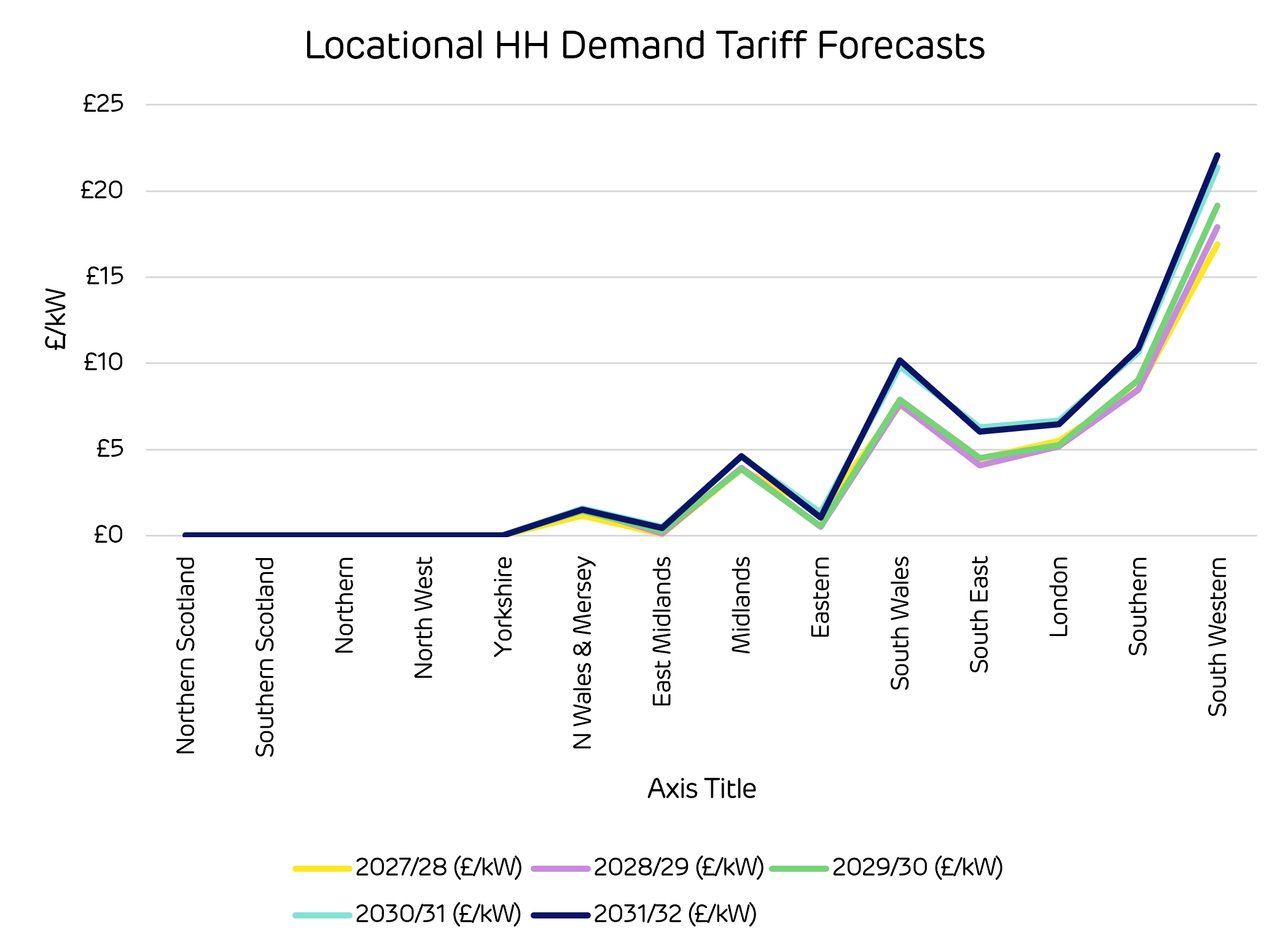
While fixed residual tariffs comprise the majority of TNUoS tariffs (>95%), there is also a small locational demand tariff for half-hourly (HH) and non-half-hourly (NHH) customers. Average locational demand tariffs are mixed in the near term but rise later in the forecast. The average Half-Hourly gross tariff is £3.29/kW in 2027-28, slightly below the April Initial Tariff, then increases to £4.05/kW by 2031-32. The average Non-Half-Hourly locational tariff is 0.46p/kWh in 2027-28 and rises to 0.58p/kWh by 2031-32. NESO attributes the locational movements to changes in the modelled network, nodal demand and generation forecasts.
Regional locational signals
For Half-Hourly demand, zones 1 to 5 are forecast to remain subject to the zero floor. Zones 6 to 14 show positive locational tariffs, with the highest values in the South Western, Southern and South Wales zones. The South Western zone rises from £16.91/kW in 2027-28 to £22.06/kW by 2031-32, while Southern rises from £8.48/kW to £10.84/kW over the same period.
Important caveats
NESO stresses that the forecast is subject to estimations, assumptions and future updates, and may not reflect final tariffs. No approved methodology changes have been incorporated since the April Initial Tariffs, but several in-flight CUSC modifications and Ofgem’s broader Transmission charging review could affect future TNUoS outcomes. The report also excludes any potential impact of the Reformed National Pricing programme, which could reform locational charges for new assets.
What customers should watch
- Whether DCUSA Change Proposal 466 Tariff Band to Follow Capacity is approved by Ofgem, as this would provide more flexibility in modifying exposure to transmission demand residual charges.
- Whether NESO materially changes the 2027-28 revenue requirement in the November 2026 Draft Tariffs and January 2027 Final Tariffs.
- How site counts, band allocations and demand charging bases evolve, as these determine how residual revenue is spread across customer bands.
- Whether in-flight charging modifications alter locational signals, particularly for demand.
- The potential customer impact of higher TDR charges, especially for higher-capacity LV, HV, EHV and transmission-connected sites.
Next steps
NESO will publish draft 2027-28 tariffs in November, and final tariffs for 2027-28 in January 2027.
Disclaimer
We’ve used all reasonable efforts to ensure that the content in this article is accurate, current, and complete at the date of publication. However, we make no express or implied representations or warranties regarding its accuracy, currency or completeness. We cannot accept any responsibility (to the extent permitted by law) for any loss arising directly or indirectly from the use of any content in this article, or any action taken in relying upon it.
Subscribe to our Intelligence newsletter
Stay up-to-date with all the latest energy industry news, with expert analysis from our Sales Energy Market Lead, Dan Starman, and other industry professionals.


